
RFQ List
For any inquiries, please contact our specialists
Download Form

Remove RFQ Item

New Products Catalog
Remove RFQ Item
Standard Product Development Cycle?

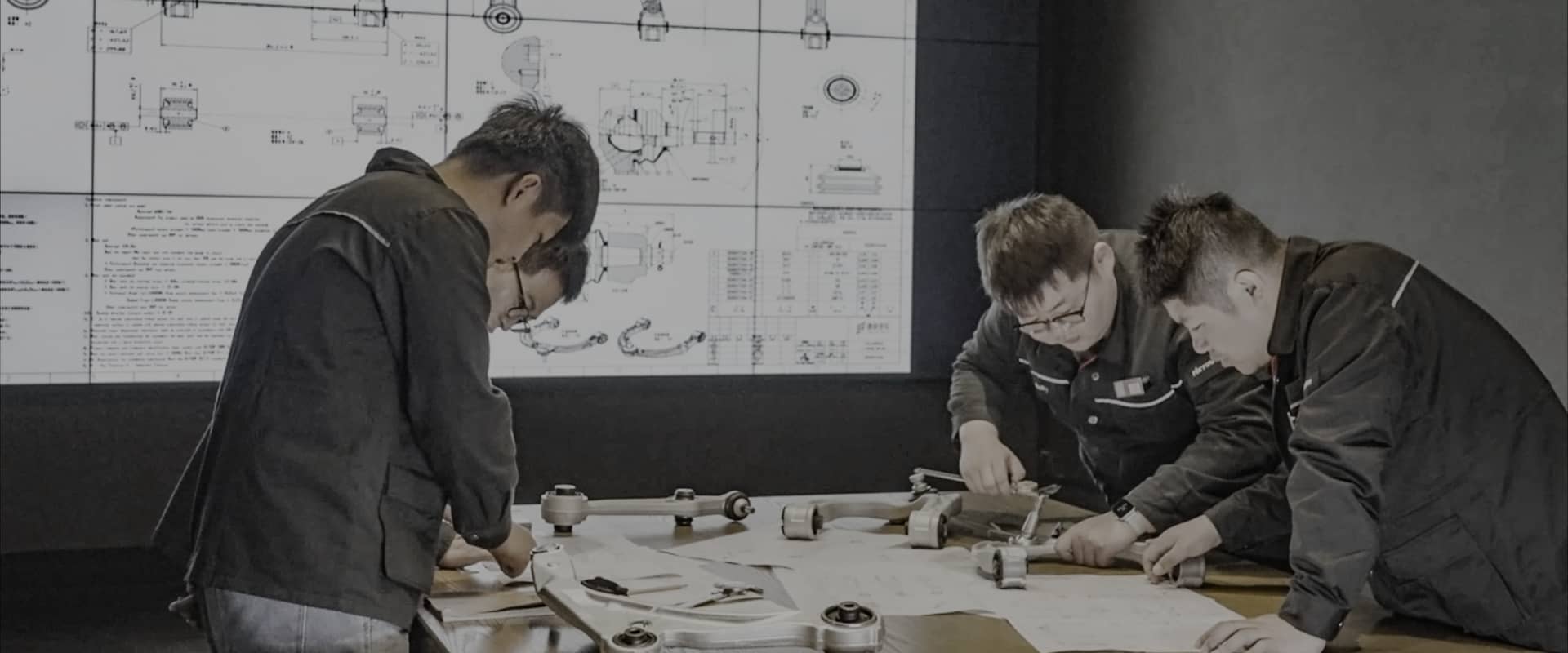
Hetian's standard development cycle adapts dynamically to product complexity, with three core phases: design verification, prototype trial, and batch validation:
Phase 1: Design Stage (7-15 days)
? Technical Feasibility: Rapid CAD design and simulation using mature processes (e.g., aluminum forging, stamping).
? Prototyping: Initial samples via manual/RPT (Rapid Prototyping Tech, e.g., 3D printing) for functional validation.
Phase 2: Validation Stage (15-30 days)
? Performance Testing: Fatigue tests and dimensional inspection in CNAS-accredited labs, ensuring compliance (e.g., German OEM standards).
? Process Optimization: Pilot runs to refine mold parameters and line layout, mitigating mass-production risks.
Phase 3: Batch Validation (10-15 days)
? Supply Chain Synergy: Concurrent raw material sourcing and supplier development (e.g., rubber damper partners) to compress lead times.
? Mass-Production Launch: PPAP (Production Part Approval Process) documentation ensures seamless transition post-customer approval.
? Critical Factors: Cycles may extend to 3 months for special materials (e.g., imported aluminum alloys) or complex structures (e.g., multi-link suspensions).
Major Project Development Cycle?
For OEM projects, Hetian employs a "Simultaneous Engineering + Phased Validation" model with the following workflow:
Phase 1: Simultaneous Engineering (3-6 months)
? Requirements Alignment: Jointly define technical specs with OEMs (e.g., load requirements for lightweight aluminum forgings), reducing sourcing decision time.
? Co-design: 65 engineers participate in OEM's Digital Mock-Up (DMU) reviews to optimize structural compatibility.
Phase 2: Road Testing & Validation (2-4 months)
? Prototype Iteration: A-Sample (functional) → B-Sample (performance) → C-Sample (process stability) validation.
? Environmental Testing: Simulate extreme conditions (-40°C~120°C/salt spray) to ensure 10-year/200,000-km lifespan compliance.
Phase 3: Production Ramp-up (3-6 months)
? Line Expansion (if required): Install automated forging lines and assembly equipment.
? SOP Launch: Pass OEM Run-at-Rate Audit for zero-defect delivery.
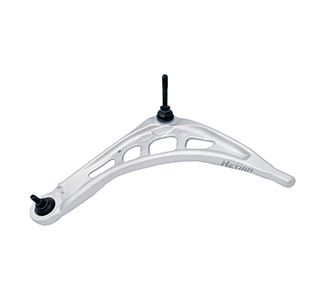
Case Study: Hetian delivered an aluminum front control arm for an EV OEM in merely 8 months, cutting mold commissioning time by 30% via simultaneous engineering.
Key Factors for Cycle Variance
Technology Maturity: Standard products leverage existing process libraries (e.g., rubber compound formulas, 27-year aftermarket database), while major projects require new material/process R&D (e.g., high-strength aluminum forgings).
Resource Commitment: Major projects need cross-functional teams (Procurement/Legal for supply chain compliance), versus standalone tech teams for standard products.
Validation Depth: OEM projects mandate full-vehicle durability tests (100,000-km road trials), exceeding lab sampling for standard parts.